Aromatherapy

Scent transcends time and space.

Short History
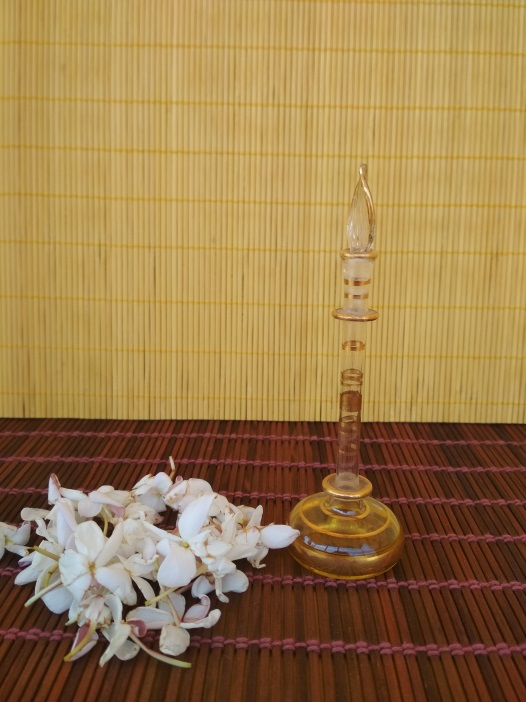
Aromatic plants have been used since the most ancient times, living their traces in specially designed bottles, texts and pictorial art throughout time. Their aromas accompanied both religious and secular rituals in ancient India, Mesopotamia, Egypt and Greece (already in the Bronze Age, 3rd & 2nd millennium BCE) and still do. Their aromas have played an important role in making them precious as beauty enhancing, medicinal, spiritual, aromatic, flavouring and therapeutic agents. As such, they have been an integrative element of social relations and cultural expression across time and space.

Aromatherapy is the art of encouraging health and well-being using natural oil extracts and essential oils. It studies and uses the beneficial properties of essential oils, which although they are an integral part of herbal practice, their study has evolved as a somewhat distinct field. The term was first used by René-Maurice Gattefossé in the beginning of the 20th century, who also discovered the amazing antiseptic and healing qualities of lavender essential oil. Another important figure was Dr Jean Valnet born in 1920, who performed extensive research on the therapeutic properties of essential oils. He used them extensively in his medical practice and is considered by many the father of modern-day phyto-aromatherapy. The French tradition, focusing in the medical use of essential oils including ingestion, has been enriched by several other doctors and pharmacists. A prominent figure in the French tradition since the 1990’s has been Dr Daniel Pénoël.

The English tradition considers aromatherapy as an important complementary path of treatment, however, EOs are not considered safe to use as potable therapeutic agents. Instead, stress is given on external use, especially through massage, in which case they act both via entering the blood stream directly and through smell. The German tradition, gives emphasis on the therapeutic effects of inhaling them. In reality, massage and inhalation are two powerful means of therapeutic treatment in which EOs play the leading role. If used correctly, as is the case with everything, EOs are a powerful warden of our health and well-being. Their potency is attesting a growing recognition. EO
How it works

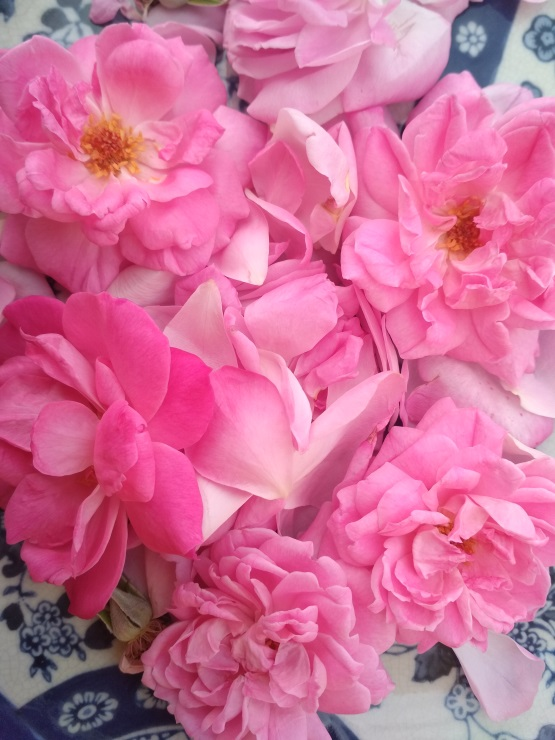
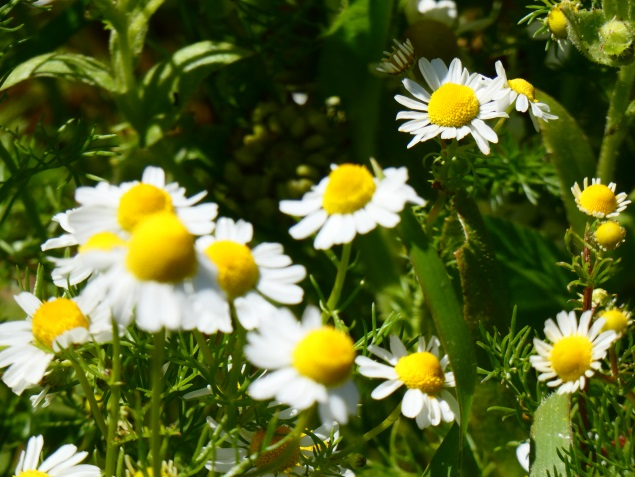
True essential oils are primarily the product of steam distillation, in which the volatile compounds of the plant are separated in the form of oil. They are considered as the quintessence of plants; great quantities of plant material are required to produce this concentrated form of healing power, this is why some are very expensive (e.g. 1 ton of rose pedals produces about 200ml of rose oil). Depending on plant, essential oils can be found in all the various plant parts; leaves, flowers, fruit, seeds, bark, wood, root, and resin and some plants deliver different essential oils from their different parts (e.g. bitter orange tree).

EOs contain hundreds if not thousands of active constituents that interact in complex and not well-understood ways, even if their medicinal effect is beyond doubt. As already said, herbs have provided the biologically active compounds for most of our modern-day drugs; however, since it’s not only one substance responsible for their effect, but the presence and synergy of multiple substances, we still have a lot to learn about their precise pharmacology. This is particularly true of Essential Oils, which demonstrate a very concentrated and at the same time multifaceted composition.

Chemical constituents of plants interact directly with cell receptors and therefore respective processes are triggered (e.g. Inula graveolens or tanacetum annuum prevent the activation of reactions normally triggered by inflammation stimuli). Secondary metabolites are particularly important; they’re the substances responsible for smell and colour, they fight off herbivores and other enemies, they attract pollinators and communicate with other species! Their straightforward evolutionary superiority to simple substances is of immense importance for our survival, health and well-being.

Just like all herbal extracts, EOs can work simultaneously at many levels affecting more than one body systems, sometimes stimulating one and relaxing another. Scent, which is perhaps EOs’ most important attribute, has a direct influence on our nervous and hormonal systems, influencing emotions, memory and psychological state. Their activity can be noted at all systems: physiological, emotional and mental. Their multi-targeting ability in combination with their variability in possible side effects or beneficial interactions explains why an individualized approach is necessary: even though many plants and herbs have an antimicrobial activity, one would be more suitable for an individual than for another.

Points of caution

Essential oils should be used with extreme caution as they are very concentrated and could therefore, be harmful. Even one drop can affect significantly our physiology. One should follow the guidelines of application:

  • Except for rare cases they should not be applied neat on the skin, but diluted in appropriate vegetable oils.  
  • They should not be used internally as they could seriously damage our mucus membranes. Ingestion should be avoided except if under expert professional consultation. Age, health condition, essential oil properties and especially dosage should be taken into serious account.
  • Attention should be paid on using genuineessential oils and preferably organic. Even though some are very expensive, they are in general very cost-effective as they last long and we use tiny amounts.
  • Get your EOs from reliable sources. Ask for information about plant identification, the place of production, the ethical principles followed, producers and wholesalers so as to get the true essential oil you want.
Ways of use

Skin application

Applied on the skin, usually in herbal formulations or diluted in base oils and other substances, they can effectively treat many conditions, from bacterial infections, to eczema and burns.


Massage

Massage can be an excellent means of treatment that operates in two ways: on the one hand, EOs are absorbed by the skin and enter the blood stream triggering desirable cellular processes; on the other, through smell that has a direct impact on our central nervous system, they can also affect our physiology, emotions and psychological state. Massage has the extra benefit of touch, which is healing by itself.


Baths – Washes

Essential oils are great to use in the bath and they are also good for skin washes (e.g. compresses & lotions). Thus, they will help successfully with relaxation or back problems in a bath, and a wash will equally comfort irritated skin.


Inhalation-Vaporization

Inhaling essential oils is also an effective means of triggering desired responses. The sense of smell is the most basic instinct and therefore crucial. EOs are important in complementing treatment whether to treat a cold, nausea, insomnia or fight depression. Inhalation is a well-established form of using them, whether in a burner, directly from the bottle, or as steam inhalation.


Ingestion

As already clarified, ingestion can be a potent but risky means of treatment and should be avoided for self-use at home. Even though EOs are approved as culinary substances, and a drop can give taste to food and drink preparations, ingesting them in everyday life is not advisable, and in some cases it can be particularly dangerous. It is appropriate only in specific circumstances and should take place only under professional advice.


Beauty

The skin is our second biggest organ. Through it we feed our body with substances that can be either health or malady factors. Vegetable oils and EOs are amazing for skin and hair care. There’s nothing like immerging into the beneficial sense and the aroma of good quality aromatic oils that can support our health and beauty. Their use can be very successful as part of a general health (and therefore beauty) care programme.


EOs for home use

Although to take advantage of EOs full therapeutic spectrum is as complex as they are, they are easy, safe and most of them cheap to use at home as first aid and to improve our well-being. An aromatherapist will certainly help you with specific conditions and is absolutely necessary for serious concerns, however, it’s worth learning a bit more about how to use them and incorporate them in your everyday life. Here follow some typical examples:

  • Lavandula officinalis: one of the rare EOs that can be applied neat on the skin. It’s very helpful to burns and insect bites, whereas inhalation can help with insomnia. Back pain, arthritis but also cuts and wounds are also among the many conditions that lavender oil can be very helpful with.
  • Citrus Limon: good antiseptic for skin problems and an immune booster, it helps circulation and relative difficulties, excellent for home cleaning, a very refreshing flavouring and aroma agent.
  • Pinus sylvestris: good for poor circulation and arthritic problems, muscular pain, the genito-urinary and respiratory systems, it helps with colds and nervous exhaustion. In a burner/diffuser it clears the atmosphere of the house.
  • Eucalyptus globulus:an effective antiseptic for skin infections and the respiratory system, one of the best for asthma, coughs, sinusitis or throat infections. It helps circulation, and relieves muscles and joints.
  • Origanum vulgare:it helps with some eczema, psoriasis and fungi conditions, digestive upsets and bronchitis, rheumatic and back pains. Try a few drops on your home cleaning cloth.

The list of aromatic plants is huge and we know only a small percentage of them. There’s nothing like the pleasure of a beautiful aroma filling our existence, nothing like the feeling of being able to look after ourselves even if just for basic self-care. Exploring and experimenting with EOs is, indeed, a very rewarding process!