

Nature, Holism, Life & Health
Why Natural – why Holistic
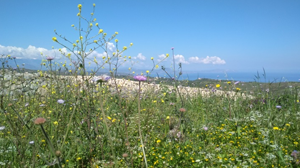
Nature is all the features, processes and forces that make up the universe and make life possible.
Nature is a whole
‘Holistic’ comes from the Greek word ‘Όλος’ (holos) and expresses Aristotle’s principle that ‘the whole is greater than the sum of its parts’, summarised in his Metaphysics (Book VIII, 1045a10) RArist. The term holism was introduced by Jan Smuts in his 1926 book, Holism and Evolution, where he defined it as “The tendency in nature to form wholes that are greater than the sum of the parts through creative evolution. R1 It is a philosophical view with a great impact on many sciences throughout the 20th century, as much in human sciences (sociology, psychology, history etc), as in ecology (the leading approach to holism) R2 and medicine. R3 , RW
The concept of holism is actually found in many cultural, philosophical and scientific world understandings overtime. In ecology, a holistic approach combines biological, chemical, physical and socio-economic aspects in a given area. It sees humans and the physical environment as a single system, a unity, an ecosystem, comprised of living organisms and non-living elements in a constant dialogue and linked through intricate interconnections. Up until modernity, cultural expression throughout the world encapsulated this basic understanding of Earth functioning as a system, however, 19th century’s reductionist thought fostered a continuous dissection into smaller and smaller parts and produced an analytical myopia that obscures the understanding of their interrelationships that make up a whole system.
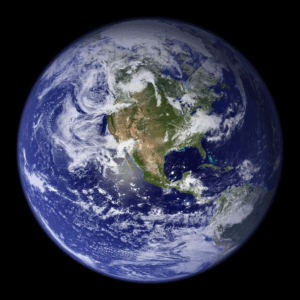 However, holism as a concept has continued and is now attracting a growing interest, as reductionist thought has proven to have negative effects on a personal, social level and environmental level. The theoretical conceptualization of holism sees important developments and acknowledgement, and perhaps one of the most significant intellectual achievements of the last century is the Gaia theory. It asserts that living organisms and their inorganic surroundings have evolved together as a single living system that greatly affects the
chemistry and conditions of Earth’s surface. Some scientists believe that this “Gaian system” self-regulates global temperature, atmospheric content, ocean salinity, and other factors in an “automatic” manner. The phrase “Gaia Paradigm” refers to the confluence of the best available scientific understanding of Earth as a living system with cultural understandings of human society as a seamless continuum of that system. It employs the powerful metaphor of “Gaia” to take the perspective of human beings as part of a living system. RGaia
In medicine, holism is concerned with treating the whole of the human being as body, spirit and mind. It contradicts the reductionist approach of treating patients as objects and views patients as people, a view that is inherent in the moral practice of medicine. RP Approaching the whole, as much in the human being, as in the universe, is the result of understanding and respecting what we call Nature and Life.
Life is a whole, the sum of relationships and processes among chemical elements and the maintenance of their balance (homeostasis). It characterizes physical bodies (matter with a temporarily defined boundary in 3-D space) that possess biological processes such as cell communication and self-preservation. In other words, it is the creation of matter and form that vibrates with vital energy producing thought and consciousness.
“Nature” refers to the phenomena of the physical world, and also to life in general and ranges in scale from the subatomic to the cosmic levels. RNat Natural, therefore, refers to living in accordance with nature and as we’ve said, there is no life separate to nature. Life is Nature’s expression.
Therefore, preservation of the natural balance, whether at individual or planetary level, is an indispensable precondition for life, health and well-being.
All the human experience on planet Earth converges to the realization that being connected with nature helps us to be connected with ourselves and our purpose in life, in other words, with our own true nature. Within a materialistic worldview, we overstress physicality and ignore the mind and the soul, the sphere of emotions and thoughts and their links with the physical world. But Existence is not an object to be treated mechanically. We are bodies, minds and souls and we live because we are part of life on Earth.