Points of caution
General comment

Nowadays plants are becoming more and more popular as agents of health restoration and preservation; they can be potent medicines, but they also hide their dangers. Their use requires caution and expertise; we all know that what we eat, drink, touch, breathe and absorb plays a crucial role on our health and well-being; therefore it is important to use what is good for us and not ‘whatever’. Even though we should not be discouraged from using herbs to boost our well-being, we should also be aware of possible dangers arising from their wrong use.

The increasing popularity of plants and their medicinal value is certainly a good thing, but combined with a profit-focused marketing and the modern characteristic of preferring quantity over quality, often results to a severe compromise in the quality of ‘natural’ products and services (as in all products and services). Unfortunately, there are both professionals with qualifications from diploma mills and natural products or ‘medicines’ of questionable value.
Individual needs & Herb-drug interaction

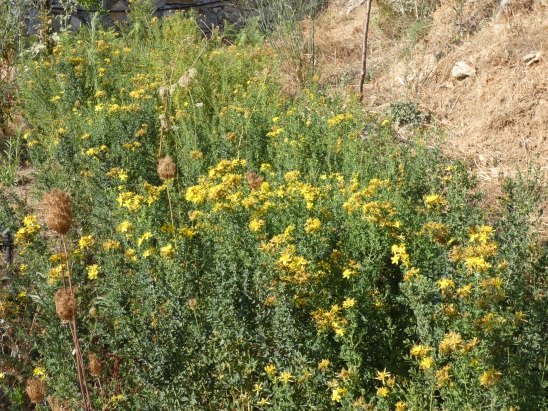
Even though a plant or herb may be suitable for the treatment of a specific condition, each individual case must be treated separately. Age differences, lifestyle, possible sensitivity to substances, medication taken and the individual’s health situation must be taken into account. Herbal medicines may substitute, support or inhibit conventional drugs. For example, St John ’s Wort may interact with prescribed medicines, in particular antidepressants and anticoagulants and should not be taken without consultation. Or, common sage, which may increase the hepatotoxicity caused by carbon tetrachloride (CCl4). WF, S

Many herbs may share the same or similar chemical constituents with which we may want to treat a specific condition. However, they cannot necessarily be used interchangeably for everyone, as each plant has multiple physiological effects on the body, so depending on the individual situation and need, one plant will be more appropriate than another.

Herbs help us guide the healing of our bodies, minds and souls, but they follow the following rule:

The right form, in the right place, in the right dose, with the right intent.

Correct identification and use

Important issues to consider are:

Correct identification of plant species. We should obtain plants from reliable sources, or if we collect them ourselves we need to be able to distinguish between different species (e.g. equisetum arvense is a medicinal plant, whereas other equisetum species are toxic).

Knowledge of which part of the plant to use, for which purpose, and how to prepare the appropriate herbal formulation. Pharmacological components are not the same throughout the plant and depend on the extraction method.

Knowledge of whether a plant needs to be used fresh or dry. Some plants are to be used fresh, others dry. Extracts can be made from fresh and/or dry plant material, depending on the plant, the extract, and the condition they address.

Quality of plant material. Old or poorly stored herbs do not keep their medicinal value and, of course, they need to be adulteration and toxic-free.

Toxicity-Dosage

Plants are in general safe to use, however, there are plants that can be dangerous poisons and others that may be unsafe for in our personal case. Even common potato contains toxic compounds (glycoalcaloids), whose levels increase with age, physical damage and light exposure, and we all know of poisoning cases from mushroom species. Toxicity depends mainly on plant species, part of the plant, heat exposure, whether fresh or dry, or growing conditions, but even poisonous plants can be used medicinally.

Dosage is of crucial importance so as to avoid adverse results. In general, people tend to think that an herbal medicine is totally innocent and that a higher dose may double its effectiveness, but this is false, naïve and dangerous belief, just as in the case of single substance, conventional drugs. Still, it is very rare that a fatal health problem arises from the overconsumption of plants, since large quantities would be needed for an overdose of active constituents. Thankfully, toxic plants are known and avoided in folk medicine. There’s a greater risk from an overdose of synthesised drugs made of plants, in which single active constituents have been artificially increased.

Getting hold of plants

Try to buy plants from reliable providers. The more information you have about the plant, including latin name, the better it is. Aroma and colour are good indicators when you get some experience, and conditions of storage crucial. Prefer local producers as much as you can, and when possible grow them yourself. Learning about plants is very rewarding and if you want to collect from the wild, make sure you recognize the plants safely and only from places where there’s abundance and you won’t interrupt the ecosystem’s balance. Never collect rare plants.

item-yoga