AURAMA

It is ideas and thoughts first conceived in the mind, which construct reality.

Aurama is Marina Gkiasta’s vision of living in harmony with nature and in balance of body, mind and spirit, which according to her classics education and further studies, her cultural background, her philosophy and experience is what determines quality of life. It is also the brand name of her home industry of herbs and herbal products. ‘Orama’ in greek means vision, but ‘aura’ refers to a more etheric state of being. It is based on a holistic view of the world and focuses on ways of perception, living, prevention and healing that promote the balance with ourselves and the world around us.

After a deep long dive into human history, human nature, the relationship between humans and the rest of the natural world, and understanding the principles of life and the state of health and dis-ease, it feels only natural that Marina understands why a balanced relationship with nature should be our most worthy goal. It is a precondition for environmental, social and personal prosperity, which is what we deserve and should aim for. Even when we live in an urban environment, we should try for the healthiest possible relationship with nature and our own nature.

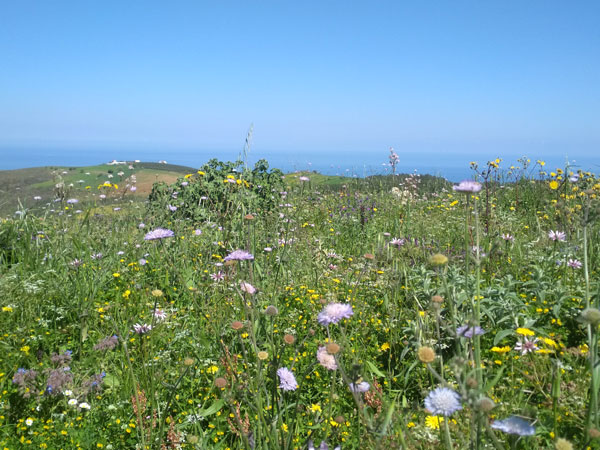
In the beginnings of 2010’s Marina moved to the countryside of the island of Crete, a place still preserving some environmental and cultural richness quite unique for the modern Western world, which, however, is threatened intensely and is constantly being restricted through industrialization and globalization. Realizing a dream she has had since adolescence she is delving into the knowledge and experience of living in the countryside and practicing natural healing. Together with Michalis Pavlakis and with contributions from other worthy people, they built an environmentally friendly house and applying modern and ancient techniques of energy flow. They are developing a modest, a permaculture garden with trees, eatable and medicinal plants, with most of them growing wild or semi-wild, and they are transforming a marginal, rocky and overgrazed piece of land into an ecosystem of high biodiversity. Weather conditions can also be extreme and it has been an amazing school for us to observe how plants respond and how we all adapt to living together.

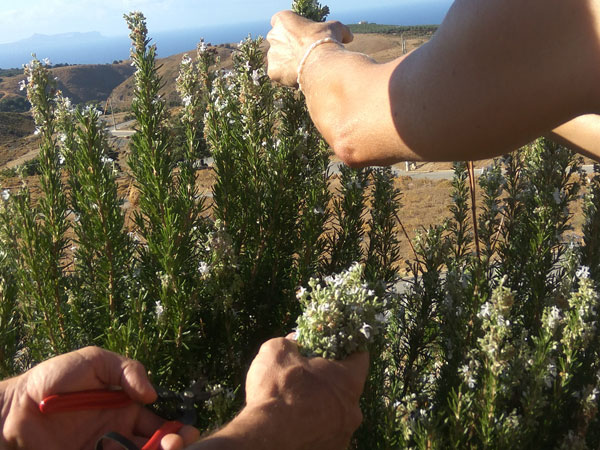
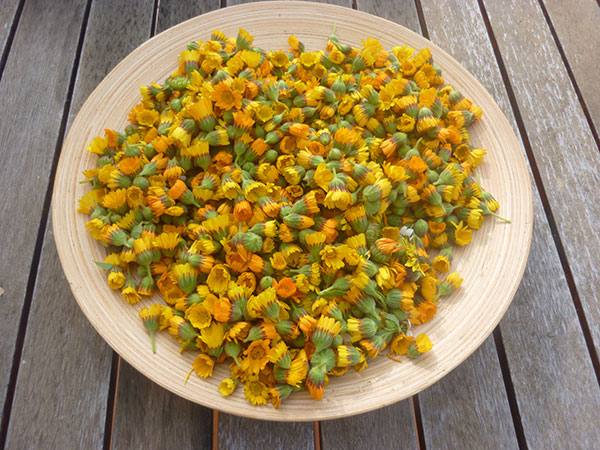
They produce a range of herbs and herbal products while the garden’s plants and the garden as a whole, forms part of Marina’s holistic practice.
Aurama is not about a luxurious lifestyle. It concerns the luxury of living well.

Goals

  • To offer individualised consultations and therapy sessions that focus on the particular, personal needs of an individual and draw up  upon the healing power of plants and medical herbalism, approaches and concepts from the ancient path of classical Indian yoga and other cultural traditions, and  the therapeutic potential of talking and speech expression.
  • To offer educational and therapeutic seminars, workshops and activities of an holistic approach to life, health and well-being.
  • To contribute to pathways of meeting, co-creating and sharing knowledge about life at physical spaces and natural environments.
  • To propose an ecological, therapeutic model of Permaculture food and herb gardens through the safeguarding of biodiversity, since it is  the harmonious coexistence/cohabitation with the other living organisms that sustains and promotes life, health and well-being.
  • To foster relationships of cooperation and co-creativity that promote medical herbalism, holistic healing, personal and social well-being and that support both the preservation of environmental and cultural diversity, and the appreciation of traditional wisdom.
  • To produce high-quality medicinal plants and herbal products of biodynamic, organic, and sustainable cultivation.
  • To promote awareness of the medicinal value of Cretan plants and traditional lifestyles.
  • To support and share principles of self consciousness and understanding/awareness of the world we are part of.
  • To explore and share experiences and knowledge regarding ways of living that are actually compatible with Life.

OUR PHILOSOPHY

The world is a whole

The most common point of convergence among philosophers, scientists and humanitarians throughout time is the understanding that:


Nature is a whole.

Humans are part of nature and a whole of spirit, soul and body.

We can prosper only in healthy natural and social environments.

Happiness is to live in wholeness.


A holistic view, which recognizes the indissoluble relationship between humans and the natural world and which makes good use of the knowledge we have inherited since antiquity is, I believe, the only road towards health and well-being. Although modern scientific developments have benefited humanity in various ways, the current perception of dichotomy between humans and (their own) Nature has caused severe disruption / disease as much to individuals, as to the whole planet and our society.

People are part of Nature and can never respond to their natural needs except if they are in tune with nature, namely, if they respect their own nature and enjoy environmental and social prosperity.

Nature, Social prosperity, Health and Well-being

Nature is all the features, processes and forces that constitute the universe.

Nature makes life possible.

Life is a dance of biological processes that creates form, thoughts and feelings in all living beings.

Health is the state of balance among mind, body and spirit.

There is no health and well-being without peace, freedom, justice and positive emotions.

How the natural environment impacts on health and well-being:

Α. At the level of the individual as a natural entity, body, mind and soul: the environment which we live in impacts on our survival as much directly, e.g. breath, food and socio-economic activities and identity construction, as indirectly, influencing our senses and our microbiome. It is through our senses and microbiome that we receive messages from the outside world so as to adopt suitable strategies of adaptation, defence and survival. Both play an active role in our health, that is our mental and psychological state.

Β. The natural environment is also linked to the sociocultural evolution and ideology, which influence in a direct manner a person’s psychological and emotional development. When a society evolves in a harmonious relationship with its ecosystem, it can ensure a friendlier social environment for the individuals that comprise it, fostering a positive emotional development and healthy social relationships.


The harmonious coexistence and coevolution of humans with their natural environment is a prerequisite for personal and social health and well-being.

About Dr Marina Gkiasta

I was born in Athens, I have lived, studied and worked in Greece, the UK, France and the Netherlands, and I currently live on the island of Crete in Greece. I am a medical herbalist, yoga therapist, doctor of Landscape Archaeology, horticulturalist/herbs grower, and educator. I have chosen to live in the countryside of Rethymno, where I’ve grown medicinal plants since 2013 and I offer holistic therapy consultations & sessions, group seminars & workshops, herbs and plant products to people who want to improve their health and quality of life with natural means. My studies, work and life’s experience have led me to the appreciation of understandings, knowledge and wisdom acquired within all cultures and across the aeons.

Having important personal experiences on the value of holistic therapy myself, I work with the healing power of plants, which I may combine with classical Indian yoga practice techniques and the therapeutic nature of speech. Through private sessions and small-group seminars I treat, but also educate people on how a holistic approach can open the way to unlock our own self-healing potential. I have found that herbal medicine and suitable nutrition, the expression, understanding and sharing of our situation and appropriately chosen breathing, relaxation and somatic techniques are a powerful combination that can help us to correct imbalances and significantly improve our health and quality of life. They all have a positive influence to the way we think and live, which are core to our existence, and with relevant knowledge they can be beautifully combined with other complimentary and orthodox medicine interventions.

Like many people, I wanted to understand the world and the mystery of life beyond the limits of space and time, something that offers a deeper sense of freedom. My way was to learn from many paths of life, to be open to knowledge and ideas from all over the world and throughout time. I studied and worked for many years in the humanities (history, archaeology and history of art, linguistics, classics, philosophy and psychology (BA at NKUA & Sussex University; MA at UCL), but also in environmental sciences and IT, which are integral to landscape archaeology. I received a university scholarship to obtain my Doctoral degree in Landscape Archaeology (University of Leiden) and I studied the coevolution of the natural environment and human culture diachronically, focusing on prehistory and the rich data set of landscape research on the island of Crete.  My postdoctoral research interests evolved around the sociality of the landscape. In short, I spent over two decades on research and education in universities, research institutes, the public and the private sectors in Greece, England, France and the Netherlands and I have participated in many national and international research projects, conferences and scientific workshops. In my journey of exploring sociocultural development overtime and across space, I was drawn to explore the human subconscious and I concentrated on the deeper relationship between man and nature, a relationship profound and diachronic as much biologically as socio-culturally.

My training on handling and analyzing large and complex data sets and my experience in academic research have been crucial to my studies and work experience as a medical herbalist, whose work is to unravel the complexity of human health imbalances and treat them through the complexity of plant chemistry and energetics. Medical herbalism studies are rigorous, at Bsc level and include physiology, pharmacology, clinical examination and diagnosis, at a similar level to the studies of General Practitioners of Medicine. My diploma (Heartwood Education – founded by the National Institute of Medical Herbalists) takes 4-6 years and demands long and laborious clinical training before the Final Clinical Examination, which I completed in 8 herbal clinics and a General Practice in the UK an Ireland. I am a member of the College of Practitioners of Phytotherapy (CPP), the Greek Society of Enthnopharmacology and the School of Restorative Medicine and my Continuous Practitioner Development includes medicine, herbal medicine and psychoanalysis.

I was introduced to herbalism and healthy nutrition as a child by my father, who came from the highlands of Greece. Carrying an old and rich cultural tradition as well as a passion for nature and learning he taught me much about wild nature, vegetable gardens and medicinal plants. My mother was also a passionate gardener and we’ve shared many hours of happy gardening together. Already as a young girl I was dreaming of making herbal oils and I was instantly enchanted by aromatherapy when I was still an undergraduate in 1991.

So, my plant medicine consists of herbal medicine, nutrition, aromatherapy and the healing experience of reconnecting with nature. Furthermore, my studies both in humanities and as a medical herbalist included psychology and counseling, fields that I explored further through seminars and workshops; my long interest in exploring the human psyche has led me to realize the nonsubstitutable therapeutic power of speech, which I embed in my healing practice. Finally, as a practitioner and certified teacher of classical Indian yoga I use relevant techniques therapeutically to people who feel it may be helpful. Thus, I am still studying space and time, but I am now dealing with the complexity of the human organism and its relationship with the natural environment in a zoom-in framework of human physiology, biochemistry and phytochemistry. The focus is human health, which is naturally inter-linked to ecological and social health, and the status of all can be seen in socio-cultural expression, I find it so interesting! From the production of ATP we travel all the way to the production of art and social phenomena. It is quite amazing how everything interconnects when ‘philosophia’ and ‘episteme’ are united, and in fact they were born as one and the same in ancient Greece.

Regarding my relationship with yoga, it started as a child and adolescent when I was trained in gymnastics and I have been involved in various kinds of bodily activities, dance and Asian therapeutic techniques (Qigong, Reiki) obtaining a valuable experience (positive and negative) about how the body functions. Since very young, I have also trained in mind concentration, I studied ethical philosophy, and I started to look into the philosophy and practice of yoga in 1988. I am deeply influenced by the idealism of my own cultural background of ancient Greek and Greek orthodox philosophies and ethics and I have found connections with most other secular and religious humanistic and idealistic philosophies of the past and the present, including Western European, but extending to all continents and far back in the past. I am really enchanted by the way in which philosophical thought and symbolic language everywhere in the world converges in world perception and ethics regarding the most significant for personal and social prosperity points. The philosophy and practice of yoga is yet another great cultural inheritance guiding self-development through practical training. Since 2000 I have been practicing Classical Indian Yoga on a regular basis and I started teaching in 2016, focusing on self awareness and the improvement of health.

The last 13 years my focus on the therapeutic value of plants and the importance of healthy ecosystems for human life, health and well-being led to the study and reformation of degraded, rocky pieces of pasture land on the island of Crete and I propose herbal and food gardens based on biodiversity and permaculture principles. I believe that they are a valuable alternative to our relationship with the earth and the land, especially so, in view of the current challenges of an exaggerated exploitation and misuse of the natural environment, which leads to a disturbing loss of natural and cultural biodiversity and a big socioeconomic crisis. My herbal garden serves as healing and teaching ground, but also as a source for my plant medicine.

The holistic approach to therapy has been common sense to all medicine traditions across the globe and may be associated with Aristotle’s perception of the human being as a whole of soul, body and spirit, and not as the sum of individual parts, a view that seems to characterize cosmic existence in general. Having a really holistic approach to therapy, I focus on the relationships among the physical, emotional and mental planes and I pursue the balance between tradition and modern science. I have the utmost respect for the intellectual achievements of humanity across time and all over the globe and I feel awe for the miracles and the beauty of nature. I have realized that life is a holistic experience, and that although we think that we are the rulers of the world, it is, of course, plants that hold the secrets of our lives.