Nature, Holism, Life & Health

Why Natural – why Holistic
 

Nature is all the features, processes and forces that make up the universe and make life possible.

Nature is a whole

‘Holistic’ comes from the Greek word ‘Όλος’ (holos) and expresses Aristotle’s principle that ‘the whole is greater than the sum of its parts’, summarised in his Metaphysics (Book VIII, 1045a10) RArist. The term holism was introduced by Jan Smuts in his 1926 book, Holism and Evolution, where he defined it as “The tendency in nature to form wholes that are greater than the sum of the parts through creative evolution. R1 It is a philosophical view with a great impact on many sciences throughout the 20th century, as much in human sciences (sociology, psychology, history etc), as in ecology (the leading approach to holism) R2 and medicine. R3 , RW

The concept of holism is actually found in many cultural, philosophical and scientific world understandings overtime. In ecology, a holistic approach combines biological, chemical, physical and socio-economic aspects in a given area. It sees humans and the physical environment as a single system, a unity, an ecosystem, comprised of living organisms and non-living elements in a constant dialogue and linked through intricate interconnections. Up until modernity, cultural expression throughout the world encapsulated this basic understanding of Earth functioning as a system, however, 19th century’s reductionist thought fostered a continuous dissection into smaller and smaller parts and produced an analytical myopia that obscures the understanding of their interrelationships that make up a whole system.
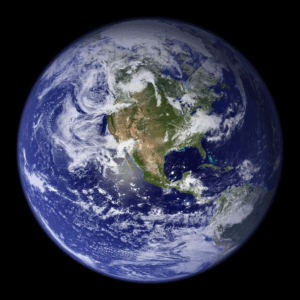
However, holism as a concept has continued and is now attracting a growing interest, as reductionist thought has proven to have negative effects on a personal, social level and environmental level. The theoretical conceptualization of holism sees important developments and acknowledgement, and perhaps one of the most significant intellectual achievements of the last century is the Gaia theory. It asserts that living organisms and their inorganic surroundings have evolved together as a single living system that greatly affects the
chemistry and conditions of Earth’s surface. Some scientists believe that this “Gaian system” self-regulates global temperature, atmospheric content, ocean salinity, and other factors in an “automatic” manner. The phrase “Gaia Paradigm” refers to the confluence of the best available scientific understanding of Earth as a living system with cultural understandings of human society as a seamless continuum of that system. It employs the powerful metaphor of “Gaia” to take the perspective of human beings as part of a living system. RGaia

In medicine, holism is concerned with treating the whole of the human being as body, spirit and mind. It contradicts the reductionist approach of treating patients as objects and views patients as people, a view that is inherent in the moral practice of medicine. RP Approaching the whole, as much in the human being, as in the universe, is the result of understanding and respecting what we call Nature and Life.

Life is a whole, the sum of relationships and processes among chemical elements and the maintenance of their balance (homeostasis). It characterizes physical bodies (matter with a temporarily defined boundary in 3-D space) that possess biological processes such as cell communication and self-preservation. In other words, it is the creation of matter and form that vibrates with vital energy producing thought and consciousness.

“Nature” refers to the phenomena of the physical world, and also to life in general and ranges in scale from the subatomic to the cosmic levels. RNat Natural, therefore, refers to living in accordance with nature and as we’ve said, there is no life separate to nature. Life is Nature’s expression.

Therefore, preservation of the natural balance, whether at individual or planetary level, is an indispensable precondition for life, health and well-being.

All the human experience on planet Earth converges to the realization that being connected with nature helps us to be connected with ourselves and our purpose in life, in other words, with our own true nature. Within a materialistic worldview, we overstress physicality and ignore the mind and the soul, the sphere of emotions and thoughts and their links with the physical world. But Existence is not an object to be treated mechanically. We are bodies, minds and souls and we live because we are part of life on Earth.
Short history of medicine


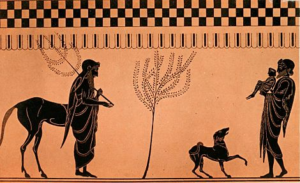
Centaur Cheiron: stepson of Apollo, he represents wisdom and the art of living. He educated gods and heroes, among them the God of medicine, Asclepius. Ch


The origins of medicine go back to the beginnings of the human experience on Earth and unsurprisingly, it has been plants with their active constituents hidden in their leaves, stems, flowers, barks, seeds and roots that have made therapy possible. HK18, HK21. In reality, up to the 2nd world war, medical practice across the world was based almost exclusively on plants. According to the World Health Organization WHO1 the majority of the population globally uses Traditional and Complimentary Medicine, and about 80% in the developing world still depend on herbal knowledge for their primary care.

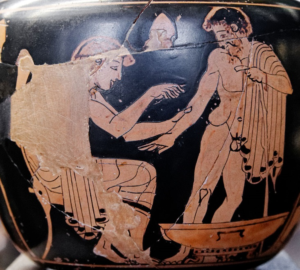
So let’s have a quick look at the historical evolution of medicine. From the ancient civilizations of China, India, Mesopotamia, Egypt and Greece to the herbal traditions in Africa, the Americas and elsewhere, people developed their own understandings of disease and treatment and despite their differences they share many interesting common perceptions about health. Modern medicine is based on the ancient Greek tradition set by Hippocrates (460-377BC), a renowned Greek physician (Asclepiad), who combined the Pythagorean philosophy with careful observations and rational interpretations relating to diagnosis and treatment. Medicine escaped the spheres of religion, magic or metaphysics and entered the sphere of scientific thought and practice. Hippocrates conceived body, mind and spirit as a whole, whose balance is based on the balance of an individual’s four humors or qualities, named black bile, yellow bile, blood & phlegm. These humors relate to Nature’s 4 elements (earth, fire, air, and water respectively) and in a way describe the dynamics of bodily fluids, solids and gasses. Hippocrates’s holistic approach is based on systematic observations of human physiology and temperament in relation to Nature and believes that the doctor’s aim is to restore the optimum for a specific individual balance. This approach shares a lot in common with other traditions such as Traditional Chinese Medicine (TCM) and Ayurveda. The clinical and ethical framework of medical practice, many medical terms as well as the famous medical vow of Hippocrates have their origins then.

An innovative figure of the 1st century BCE is the Greek Asclepiad of Bithynia, who was the first to distinguish between Acute and Chronic situations and he performed the first elective (non-emergency) tracheotomy. He supported natural and painless interventions to cure his patients such as diet, exercise, bathing and music therapy. He refuted Hippocrates’ clinical method of observing phenomena and developed a new theory of medicine based on the atomic theory (formed and followed by the ancient Greek philosophers Leucippus, Democritus and Epicurus in the 5th 4th & 3rd centuries BCE), randomness and evolution, and which resembles an early version of molecular medicine. AB
Later on, in the 1st century CE, the Greek doctor, pharmacologist and botanist Dioscourides writes his 5 volume Materia Medica, where he describes the medicinal properties of plants and which influenced pharmacology for 15 centuries. In the 2nd century CE, Galen, the famous Greek doctor of Roman times, became a cornerstone of medical science. He was a doctor, surgeon and philosopher who wrote extensively on medical matters and influenced several scientific disciplines including physiology, anatomy, neurology, pathology, pharmacology as well as philosophy. At the turn of the 10th – 11th century CE, an Iranian polymath, known in the west as Avicenna, is regarded as one of the most significant physicians, astronomers and philosophers of medieval times. His Canon of Medicine, often revised, became the centre of medical teachings in European universities up until the 17th century. He continued the Hellenic tradition combining a Neoplatonian, especially Aristotelian philosophy with elements of Islamic theology. He wrote hundreds of works in many subjects, and out of the 240 that survive, 40 are on medicine.

There have been, of course, other important figures before and after, who complete the picture of the evolution of medical science. From Renaissance onwards technology allowed a big breakthrough with the discovery of the microscope and thus, microorganisms. Later on we have new developments in surgery (after ending the medieval taboo of dissecting human bodies), the discovery of anesthesia and of course, advances such as the discovery of X-rays and the invention of medical scanners.

Holism vs Reductionism

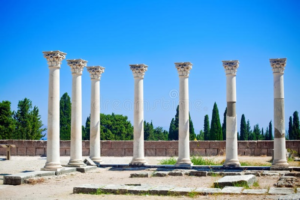
Asclepion, Kos


“Οὐκ ἔνι ἰατρικήν εἰδέναι, ὅστις μή οἶδεν ὅ τι ἐστίν ἄνθρωπος.”

It is not possible to know Medicine, if one does not know what a human is.HIPPOCRATES, 4ος BCE.


Health is a state of complete physical, mental and social well-being and not merely the absence of disease or infirmity. Preamble to the Constitution of the World Health Organisation as adopted by the International Health Conference, New York, 19-22 June, 1946. APA

The controversy between a holistic and a reductionist approach in medicine is, in fact, absurd; medical science is (or should be), by default, holistic, since it aims at the restoration of the health of an entity (the patient), even if it needs to encompass reductive methods. However, modern medicine evolved within a strictly reductionist way of thinking based on Descartes’s method of reducing a complex system to its parts in order to analyze it. This method has proven very useful in certain cases and should be considered compatible with holism, which is the essence of medical science. RW Specialization has a lot to offer, and in Public Health Systems we should support and incorporate expertise in specialized areas. Medical science has seen magnificent developments, which can by no means be undermined.

On the other hand, an over reductionist approach in medicine is shown to hide important dangers, such as oversimplification, confusion over cause and effect and arousing mistrust. MB The prevalence of overspecialization is too often proving its inefficacy in treating human beings as living organisms, which embody the amazing complexity of life. The ancient Greek (and not only) understanding that it is lifestyle that defines our state of health, has been overruled by a reductionist approach of attributing problems to uncontrollable factors (genes) and treating symptoms superficially, as if they are the problem to be tackled (whereas symptoms are just the expression of underlying causes). Furthermore, modern greed and corruption, has led to unethical practices such as unnecessary surgeries and the excess of prescription drugs being used; a study at Harvard University published in 2014 shows that prescription drugs are the 4th cause of death in the USA, whereas another study at John Hopkins School of Medicine published in 2016, shows that medical errors are the 3rd leading cause of death. HA JH

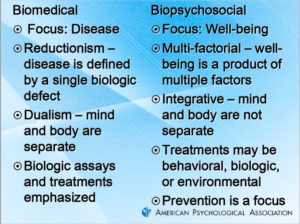
It has to be clear that medical practice is based on medical philosophy, which is the discipline that deals with conceptual, metaphysical, epistemological, methodological, and axiological matters such as the definition of health and disease, or epistemological issues regarding causality and diagnosis. HPM As stated in the Handbook of Medical Philosophy, the discussion on such issues is, indeed, necessary in order to face many difficult social and ethical issues in health care. Within this framework of advances in the conceptualization of health issues, the EURACT, the European Academy of Teachers of General Practice, in their definition of GP/FM (RH1) have identified ‘holistic modelling’ as one of the ‘six core competencies of the GP/family doctor’. They defined it as ‘the ability to use a biopsychosocial model (Engel’s RH2) taking into account cultural and existential dimensions’, and states that the model ‘deals with health problems in their physical, psychological, social, cultural, and existential dimensions’. RH3

Medical Herbalism has always functioned within a holistic, biopsychosocial framework, and combines clinical evidence and scientific research with empirical data and traditional knowledge and understandings. The essence of evidence-based medicine is also to care for individual patients by combining empirical data with the best available external clinical evidence from systematic research (Sa97). The increasing acknowledgement of the importance of a holistic, patient-centered approach is attested in a paradigm shift occurring in medicine, where the biomedical model is challenged by the biopsychosocial model. APA It is indeed crucial to realize the important role psychological and social factors play in health. With the rising health problems in our modern life-style the need for interdisciplinarity is stronger than ever. Many doctors have adopted a holistic approach and sought solutions in Herbalism and other traditional & complementary medicine such Ayurveda, homeopathy and acupuncture; their concerns about allopathic medicine include the increasing lack of freedom in practicing their profession, the dependence on often untrusted clinical evidence promoted by pharmaceutical companies, the antithesis between supposedly clinical results and what their patients experience and the conflicting information within the literature and the results of clinical research.
The alienation of man from nature, the continuing loss of inherited knowledge regarding health and well-being, as well as problematic ideologies, social inequity and unethical economic interests threaten human life and health. We need to guarantee social values and medical ethics, balance overspecialization and support holism in health care systems, guard against the excessive use of drugs and unnecessary or harmful treatments, and refute the abasement of the human being into an object comprised of different segments. Furthermore, we need to intensify the protection of cultural knowledge, the protection of our natural environment and the research into the healing properties of plants. WHO describes the importance of integrating T & CM into universal health coverage in his 2014-2020 Traditional Medicine Strategy. (WHO2) Thankfully, the 2019 global report shows an increasing growth in the number of member states with a national policy on T & CM. (WHO1)

Health is valuable. There is no doubt that too many chemical substances and an unnatural way of living play a key role in the production of imbalance and therefore, disease. Complexity is inherent to life, therefore treating a symptom without understanding and minimizing the causes cannot lead to a stable cure. The fact that each person is different and unique and that there are innumerable examples where the same problem cannot be treated in the same way, together with technological and scientific advances in medicine (e.g. epigenetics), are bringing a paradigm shift in medicine from viewing people as measurable objects, to acknowledging individualism and complexity. General patterns are, of course, valuable, but I believe that we need to come closer to an understanding of life, stay close to ourselves and nature, and together with promoting research and clinical evidence, we need to use wisely all accumulated knowledge in the long history of humanity. That is, of course, if our aim is to genuinely improve health and well-being. Thankfully, even though funding relevant research have been cut down within pharmaceutical companies, there’s an increasing interest in exploring nature’s capacity to restoring health, from both the scientific community and simple people.

Finally, I would like to note that a holistic approach often encompasses more than one therapeutic method. As stated, ‘the very concept of a single ‘holistic therapy’ is oxymoronic; at best there can be a holistic approach, combining, when needed, a variety of therapies.’ RH4 , JG.


To sum up, it is absurd to disregard any part of the human knowledge acquired regarding health, whether the technological and medical advances of the last century or the accumulated experience of several millennia. Looking at only part of the story is not the whole story, and those who are really interested in health and well-being should first of all adopt a holistic approach in life generally.


Living is not about pressing buttons, suffering and swallowing pills (even though this may also be unavoidable at times); Living is about feeling alive!

Life & Ecosystem balance


An important point I would like to draw attention to is the greatest challenge of our days, that of ecosystem loss; a dying ecosystem means no future for any of its members. The earth consists of millions of organisms like the human body consists of millions of cells. It is healthy interrelationships that allow the body to live and the earth to unfold the living experience.


Regarding plants, the current continuous loss of ecosystems means that we lose fast plant species and therefore, also medicinal sources. Only a small proportion of plants have been examined for their pharmacological effects and we are constantly loosing crucial traditional ethnopharmacological knowledge. It seems really crucial that we increase plant-based clinical and research studies and we preserve ecosystems and plant species.


But actually, it is not just about plants, animals and insects. It is also about the beauty of cultural creation and social prosperity. All of humanity’s cultural expression in food, music, dance and the arts, in thought, social relationships and everything one can imagine as an expression of life, has existed as part of life evolution in specific ecosystems. The loss of ecosystem biodiversity leads also to the continuous loss of cultural biodiversity, to the loss of richness in thought and expression. But life is all about richness and diversity.

Life is not just about survival. It is about freedom, creation, expression of feelings and thoughts hope, love and sharing. To live means to be part of the great dance of biodiversity on our beautiful planet.

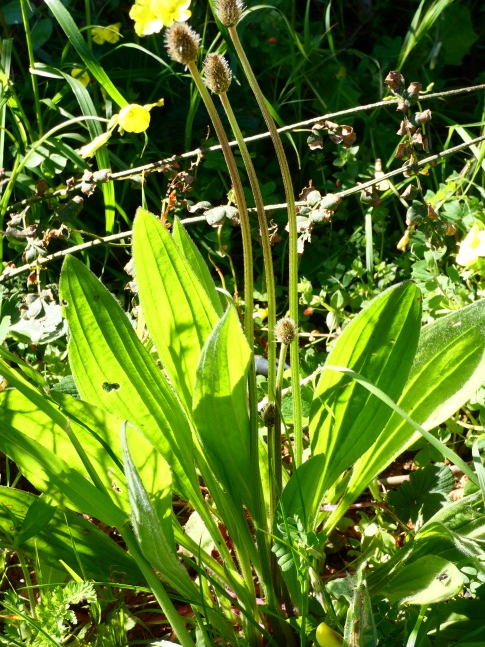
By the way, the photos in this section are not representative of ecosystem damage, as it was too heart-breaking to include such in Aurama’s website. It should be enough for anyone to just have a look around. But being part of our planetary system, we should also look a bit further away, assess the situation bravely, and realize the extent to which modern civilization and the prevalent way of thinking threatens life on Earth. And shedding the cover of arrogance, ignorance, fear, and sense of weakness, we should recognize the need to take action for the healing of our planet, our bodies, our minds and our souls.

item-yoga